Is Uv Index Higher On Cloudy Days
You have to be very very careful on those sorts of days not to assume you wont get. The UV index is generally higher on cloudless hot days.

How To Compute The Uv Index 9 Steps With Pictures Wikihow
Bright surfaces such as sand water and snow will increase UV exposure.
Is uv index higher on cloudy days. Maddeningly enough though thats not where it ends. Under partly cloudy conditions a phenomenon sometimes called the broken-cloud effect can come into play resulting in higher UV levels than a clear sky would produce and so a greater risk of sunburn or. Is 7 UV Index bad.
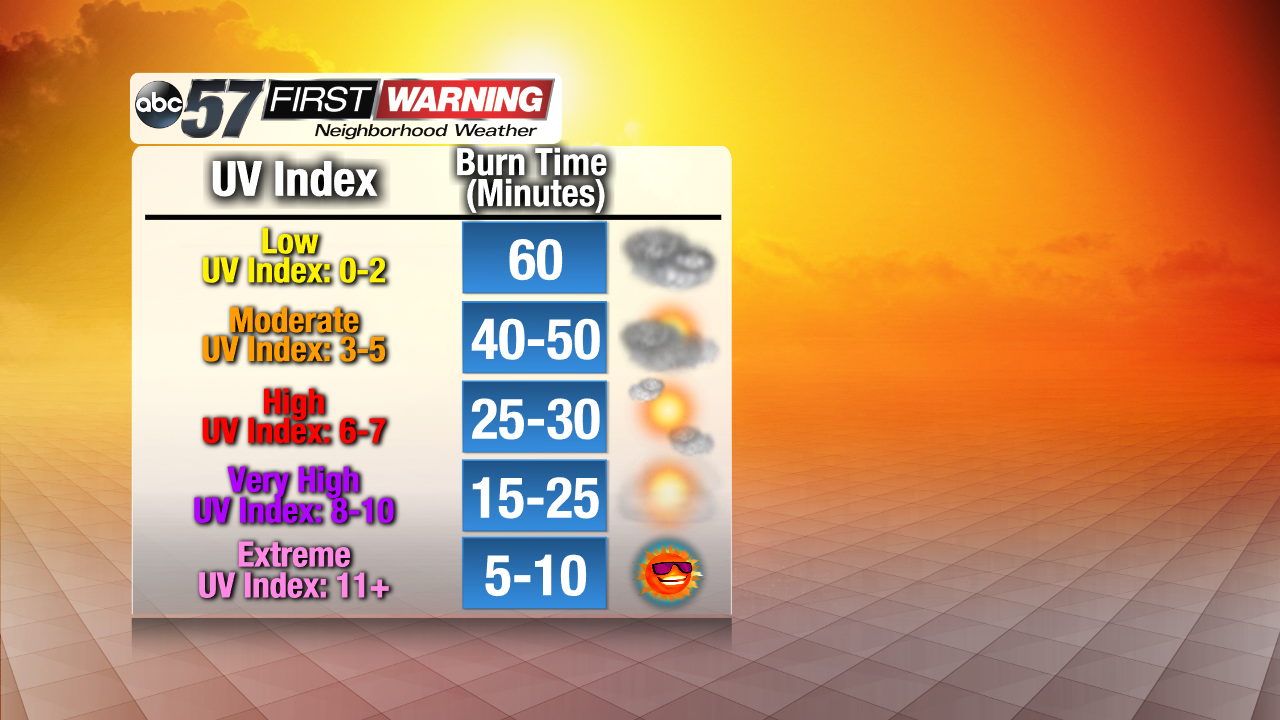
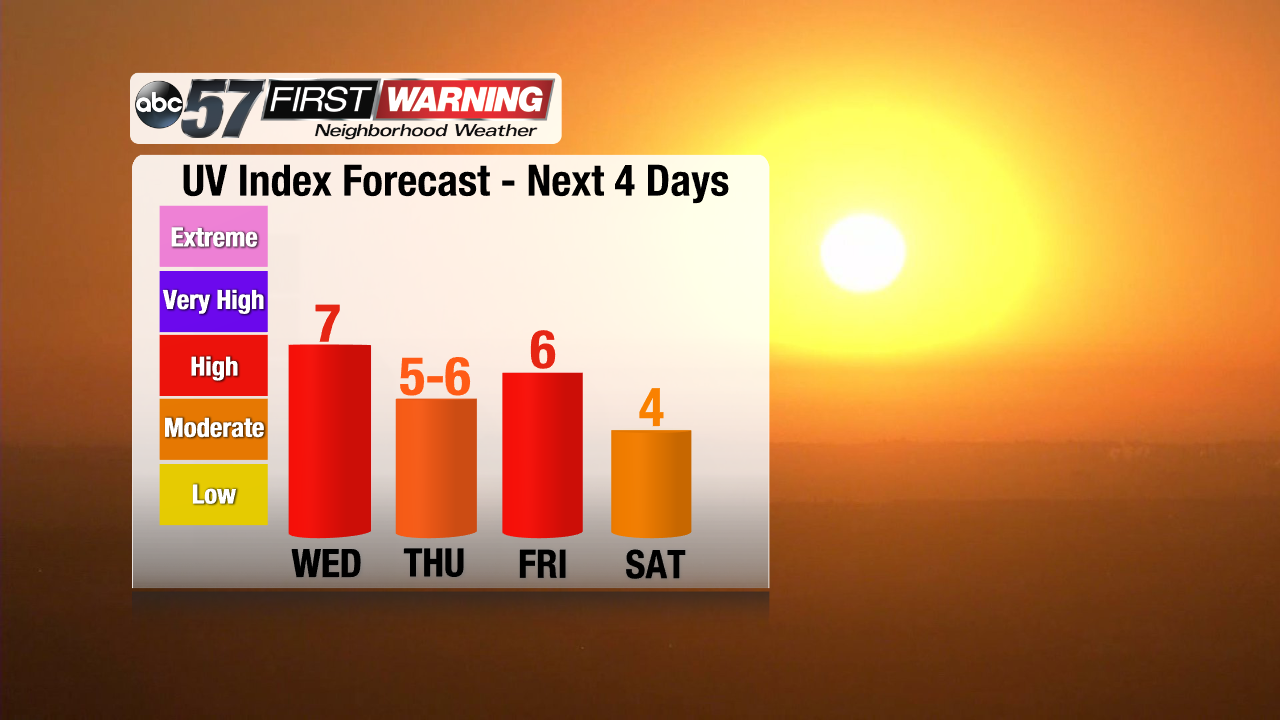
Sun damage is also possible on cloudy days as UV radiation can penetrate some clouds and may even be more intense due to reflection off the clouds. Even when the UV Index is only 4 sunburn is still possible within 50 minutes. Under skies that are only partly cloudy something interesting happens.
Consider staying indoors on days where the UV index reaches very high levels 10 as your eyes and skin can burn within minutes. Even on a completely overcast day some UV radiation gets through and on partly cloudy days your risk for skin cancer and melanoma may actually increase. Some say youre actually at more risk on cloudy days since UV rays can bounce off of clouds.
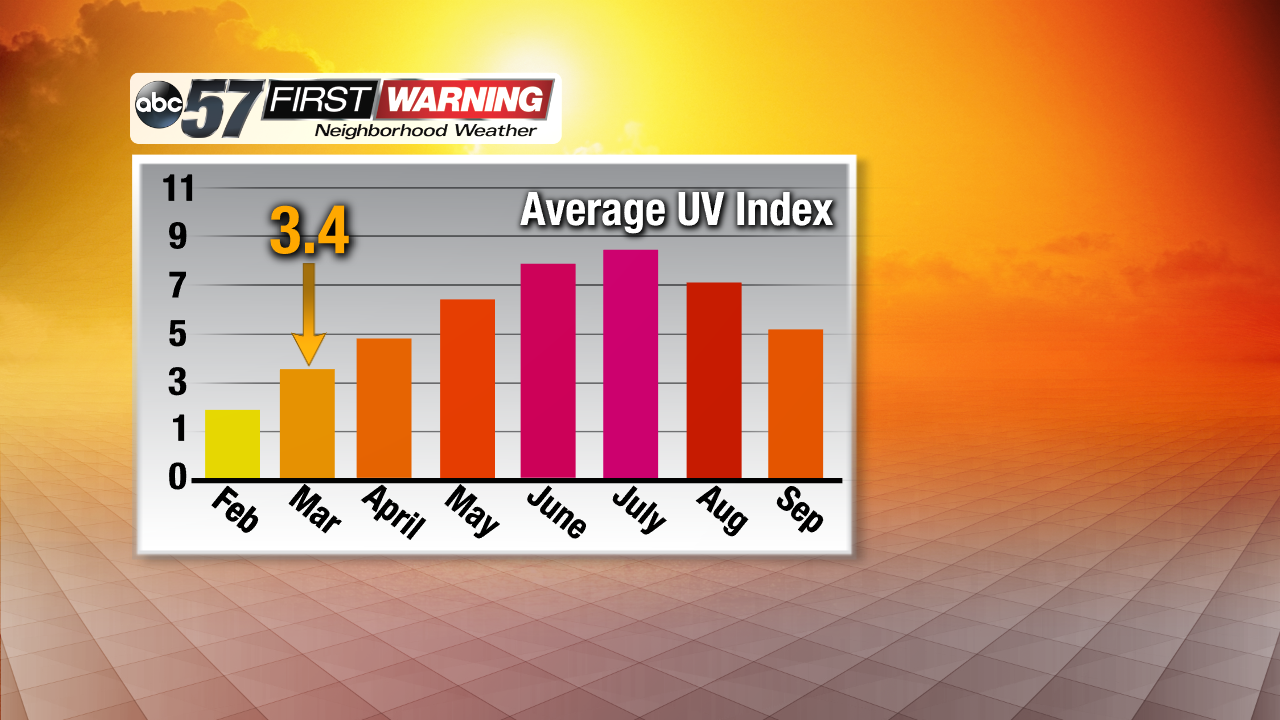
It is unquestionable that human skin can get a sunburned on cloudy days but are the UV rays actually stronger. Clouds do usually block UV rays particularly the more nefarious UV-B. The UV index in Portland OR is historically highest in the month of July averaging 8 on the UV index scale.
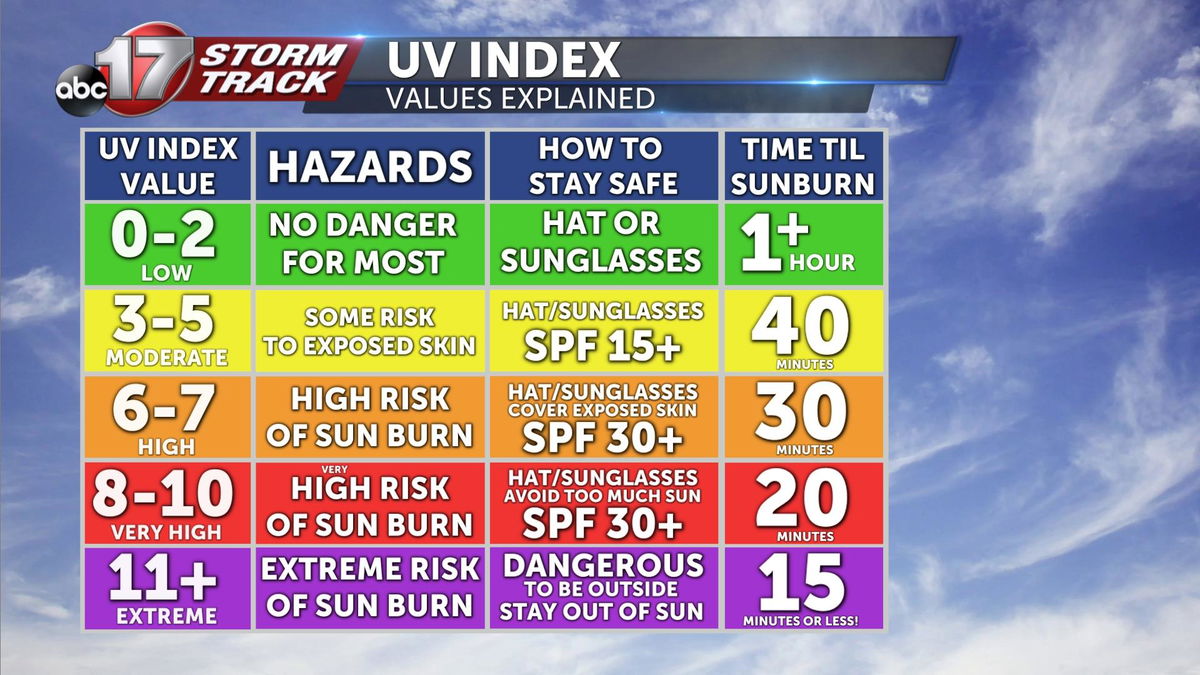
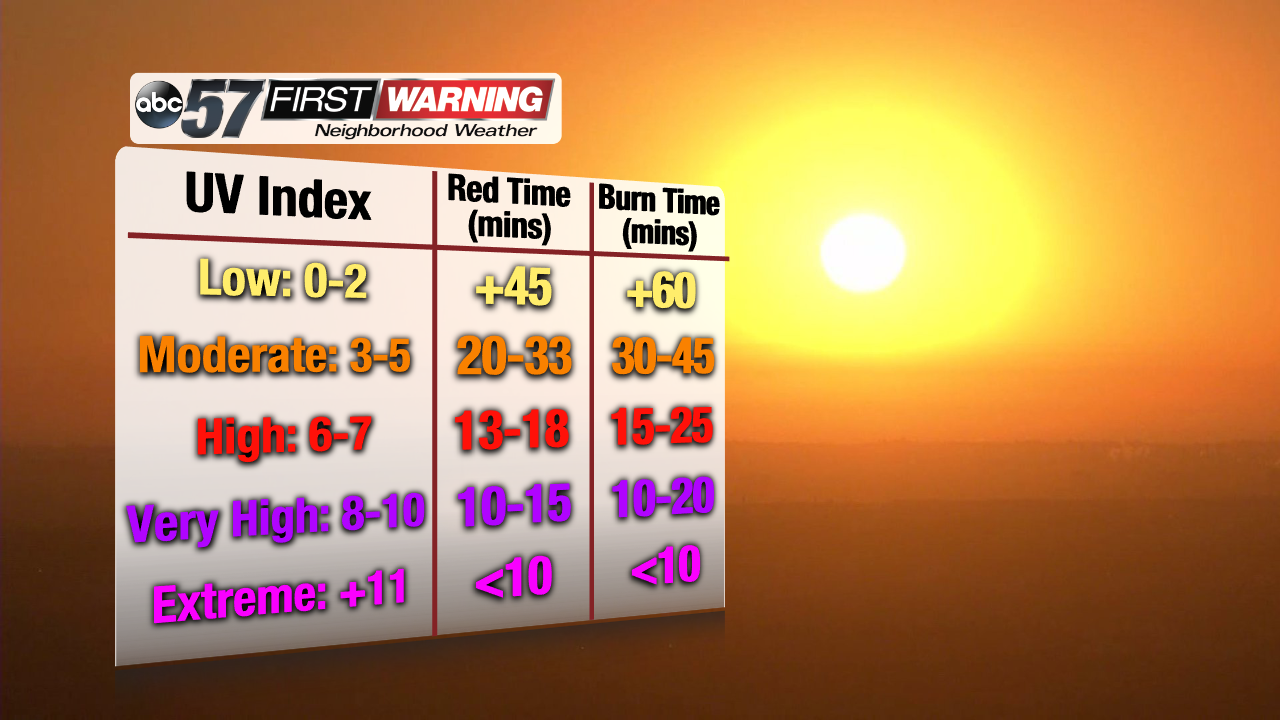
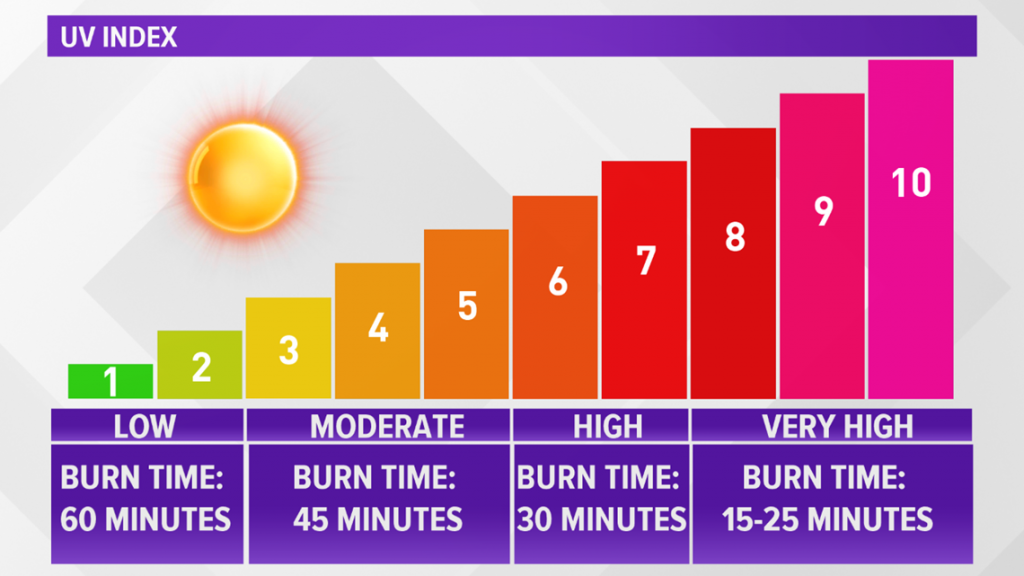
It takes into account information on the time of day date latitude altitude and ozone concentrations. Clouds usually block UV rays particularly UV-B. For example if a light-skinned individual without sunscreen or a suntan begins to sunburn in 30 minutes at UV Index 6 then that individual should expect to sunburn in about 15 minutes at UV Index 12 twice the UV twice as fast.
UV radiation can be just as high on a cool or even cold day as it is on a hot one especially if skies are clear. Factors such as ozone depletion as well as seasonal and weather variations can affect the daily UV index. Youll also get higher UV radiation levels at higher altitudes and at areas closer to the equator On cloudy days UV levels are usually lower than during clear skies as clouds can deflect rays up into space.
The UV Index is directly proportional to the intensity of radiation one will receive during a particular time of the day and year. Clouds can block up to 70-90 of these UV-B rays during times of extreme overcast. You get higher exposure to UV radiation on snow sand water or concrete since these surfaces reflect the suns rays.
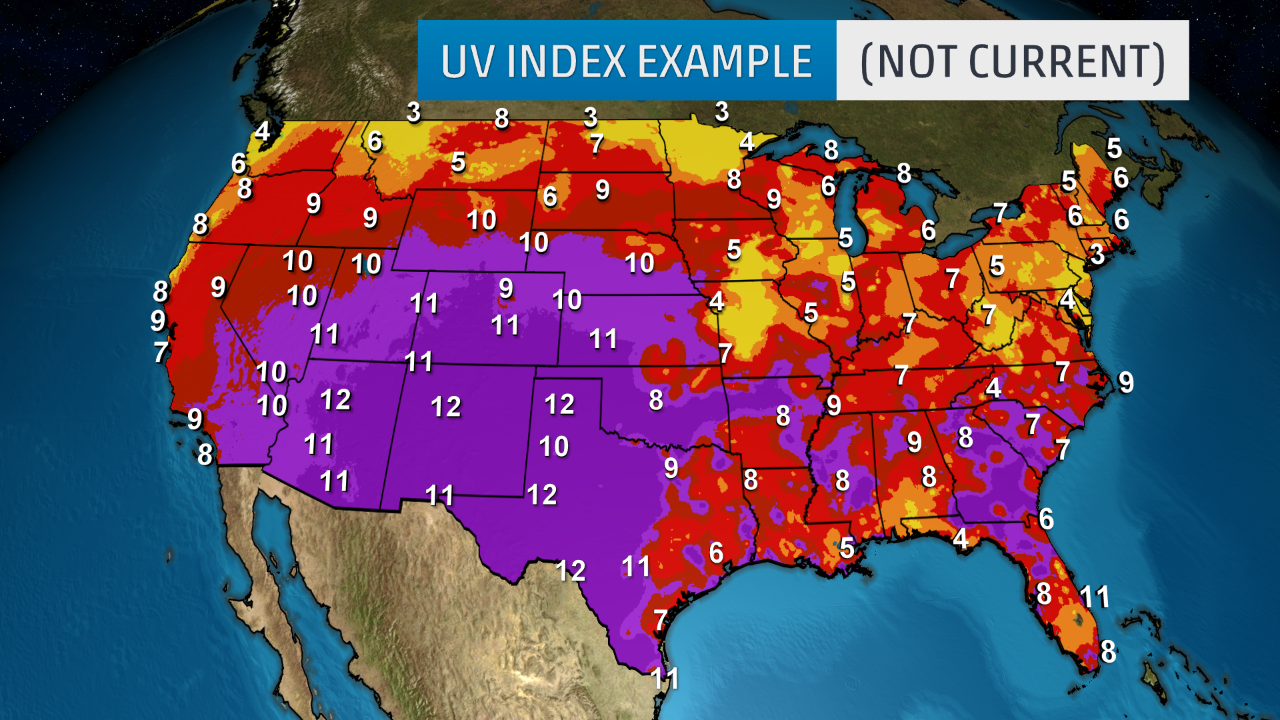
Only clear-sky UV Index values are included in the tabular forecast charts and graphs. Index values start at zero and then can rise above 10. Sunburn can still occur when the UV Index is low on a cloudy day for example but it typically takes an hour or.
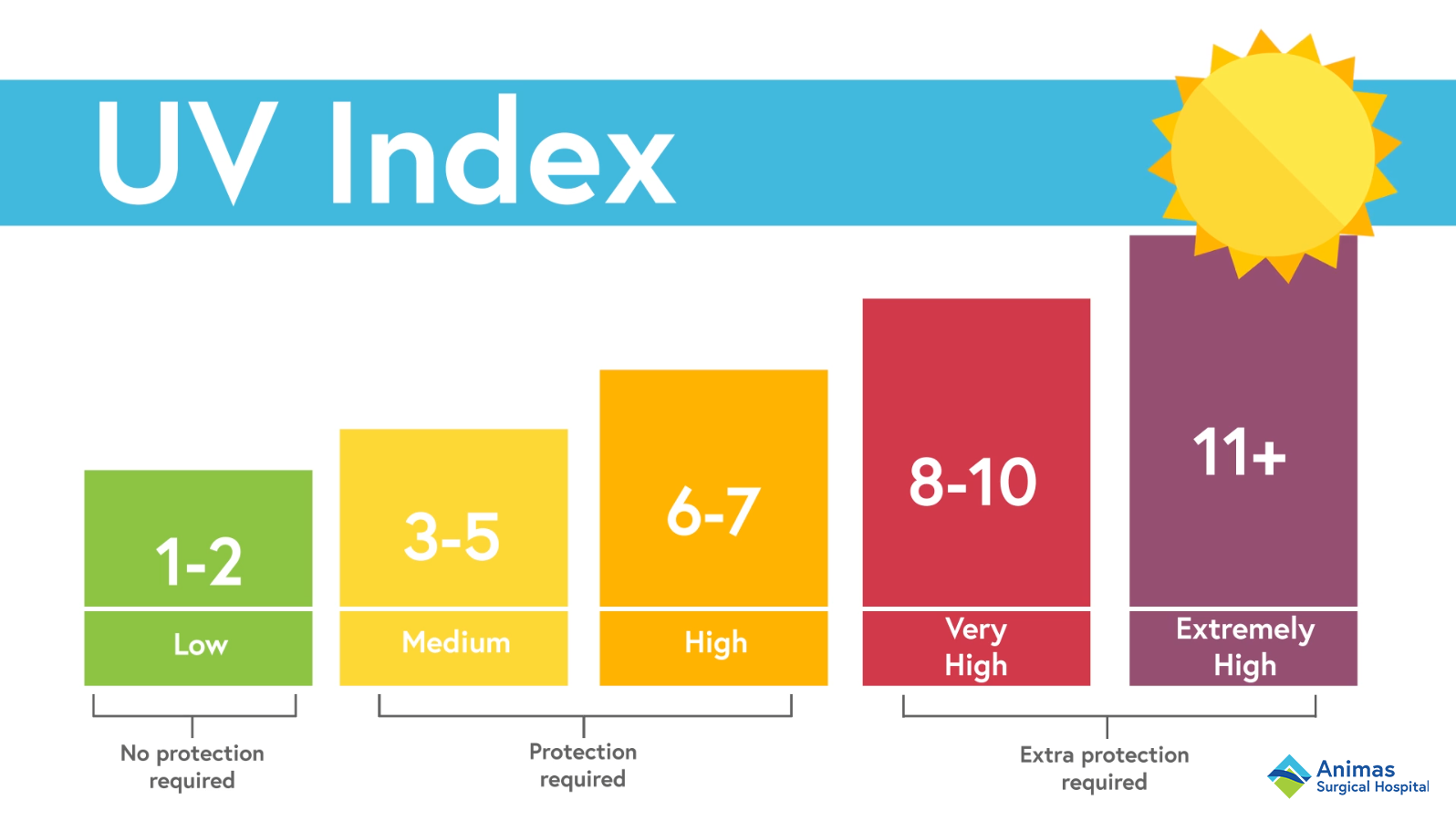
A computer model is used to forecast the UV radiation at ground level. However UV rays can still get through when it is completely overcast Hussain says. A UV Index of 6-7 High means there is a moderate risk of harm from unprotected sun exposure.
On a really overcast day they can keep out 70 to 90 percent of the UV-B coming in. Recent studies have demonstrated that cloud enhancement of UV rays can be as high as 25. Although you are not more likely to get sunburnt when its overcast there is the risk of being lulled into a false sense of security when it.
The time to burn can vary by skin type but at a moderate UV level it is approximately 30 to 45 minutes. This is exacerbated by some peoples failure to apply sunblock on cloudy days. On a really overcast day they can stop 70 to 90 of the UV-B from reaching the surface.
Generously apply broad spectrum SPF 15 sunscreen every 15 hours even on cloudy days and after swimming or sweating. The Skin Cancer Foundation says that clouds block as little as 20 of UV rays so on a cloudy day youre still getting up to 80 of the suns harsh effects. Red Very high A UV index reading of 8 to 10 means very high risk of.
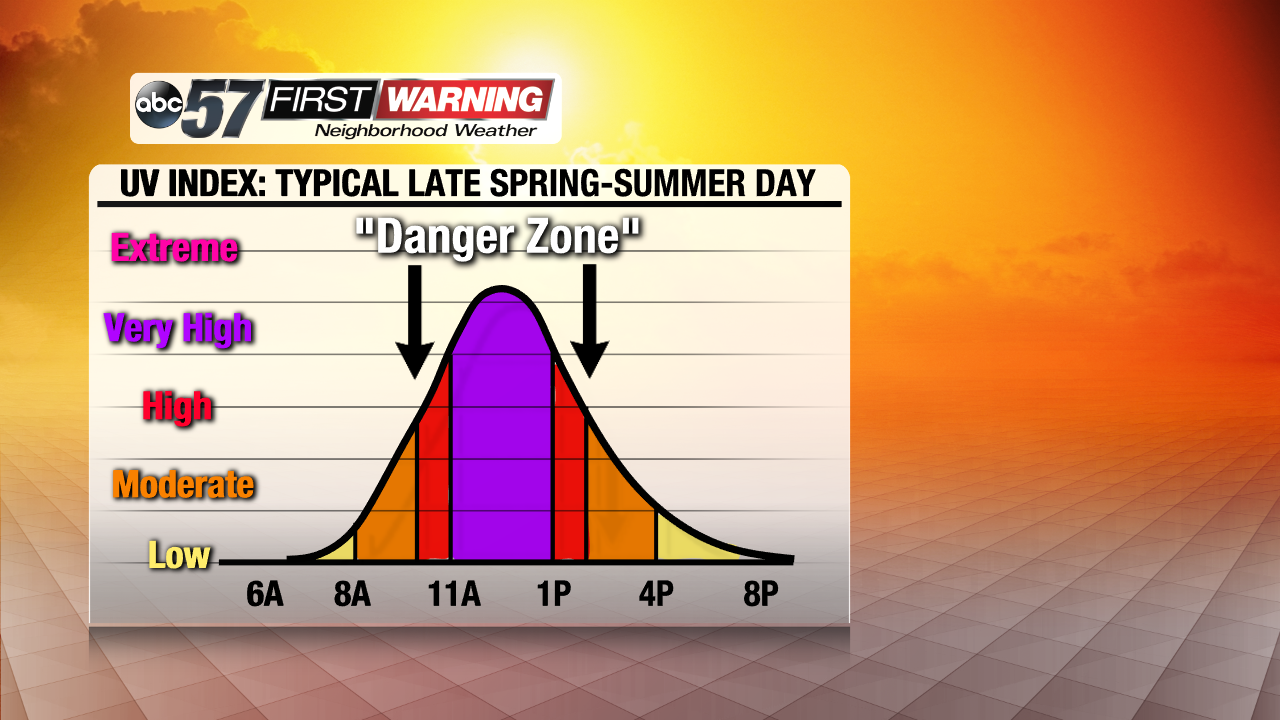
And while UV radiation is higher in summer than in winter it is still present every day of the year. The higher the UVI the greater the potential for damage to the skin and eyes - and also the less time it takes for harm to occur. The maximum UV Index is calculated for midday assuming cloud-free skies.
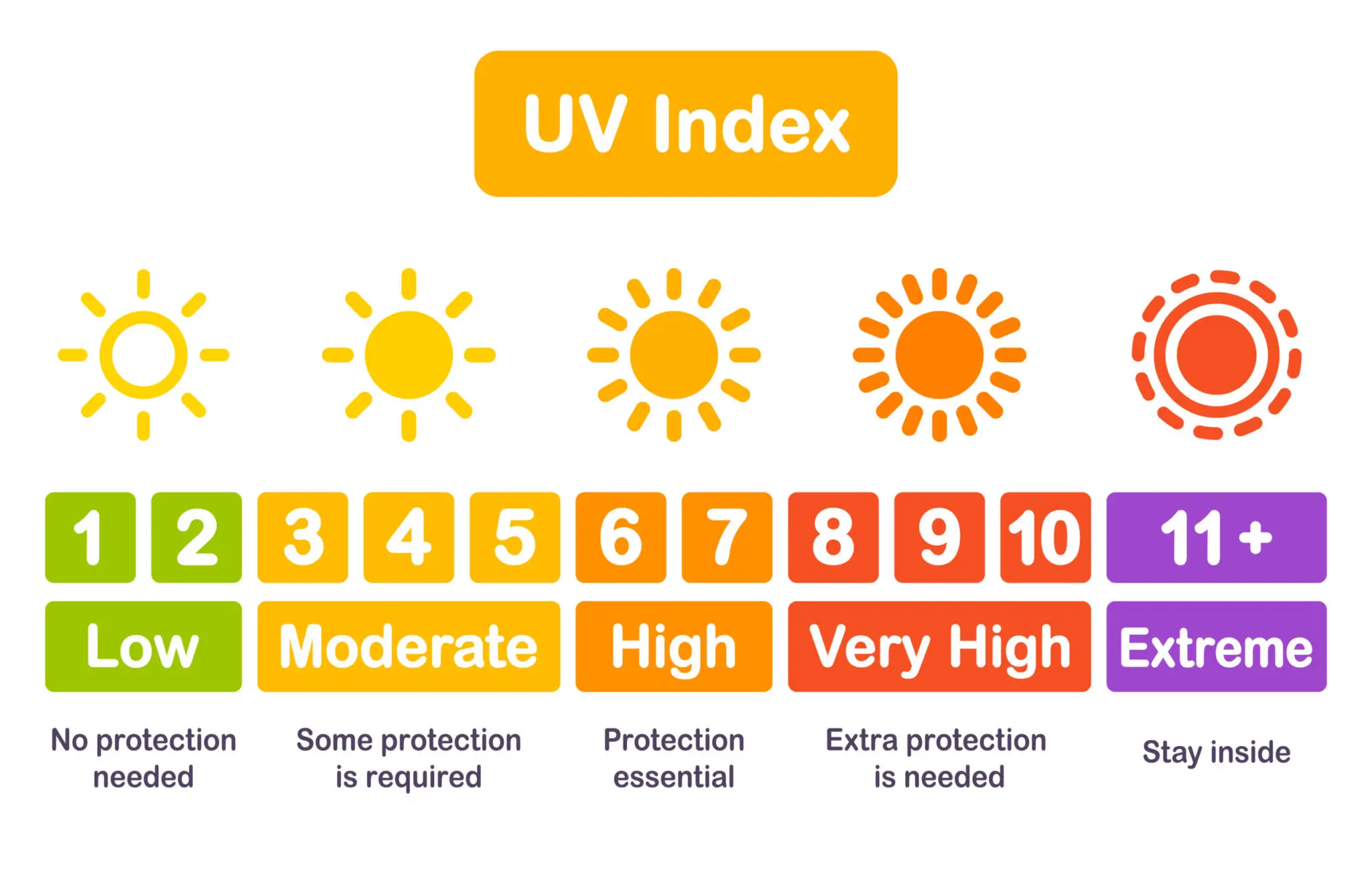
A UV Index reading 6 or 7 puts you at a high. Generously apply broad spectrum SPF 30 or higher sunscreen every two hours even on cloudy days and after swimming or sweating. You can get quite high UV levels at the ground during partly cloudy days when there are breaks in the cloud.
Sunscreen should be applied every two hours even on cloudy days and reapplied after swimming or sweating. Clouds filter out sunlight but not UV rays the bad ones that cause aging and cancer. Thick cloud provides a good filter but UV radiation can penetrate thin cloud cover.

Bfs Uv Forecast
What Uv Index Is Best For Tanning Sk N Clinics

Summer Weather Understanding The Uv Index Wpri Com

Ultraviolet Index Wikiwand

Summer Weather Understanding The Uv Index Wpri Com
The Uv Index What Does It Mean Abc17news
What Is The Uv Index And What Does It Mean
The Uv Index Dangerous Days For Your Skin Are Here

Understanding Uv Index Numbers Associates In Dermatology Explains Associates In Dermatology

How To Use The Uv Index To Protect Yourself From The Sun S Harmful Rays Accuweather
The Uv Index Dangerous Days For Your Skin Are Here
Warming Up The Uv Index Longer Days

The Uv Index What Does It Mean Abc17news

Are The Sun S Uv Rays Really Stronger On Cloudy Days Fact Or Myth
What Is The Uv Index The Weather Channel Articles From The Weather Channel Weather Com

The Uv Index How Much Is Your Skin In Danger The Weather Channel Articles From The Weather Channel Weather Com
What Is The Uv Index Ultraviolet Index Explained Climatebiz
The Uv Index Dangerous Days For Your Skin Are Here
Warming Up The Uv Index Longer Days

Post a Comment for "Is Uv Index Higher On Cloudy Days"